Production Process
Our efficient production process ensures high-quality aluminium profiles.
We carefully design for performance, durability, and aesthetic appeal whilst adhering to stringent environmental and sustainability standards.
Extruding
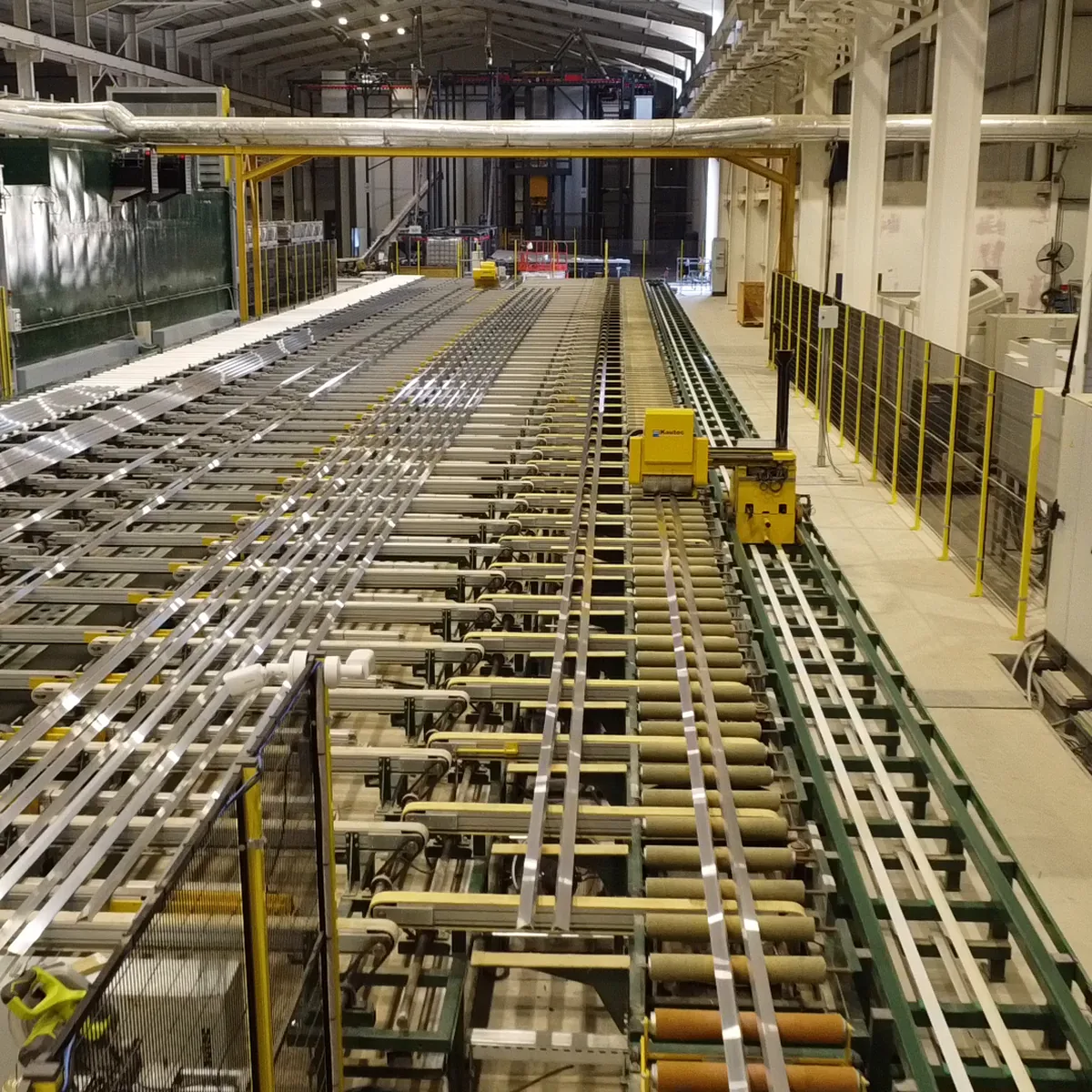
The billet (aluminium alloy raw material) enters an oven at 400–500 °C, then is cut and mechanically pressed in the extrusion press, passing through dies (moulds) to form the various profiles.
The profiles are then cut to the required length and placed in the ageing oven (180 °C for 5–7 hours) to reach the required hardness.
Any solid off-cuts and aluminium chips are collected in containers and sent for recycling.
Powder coating
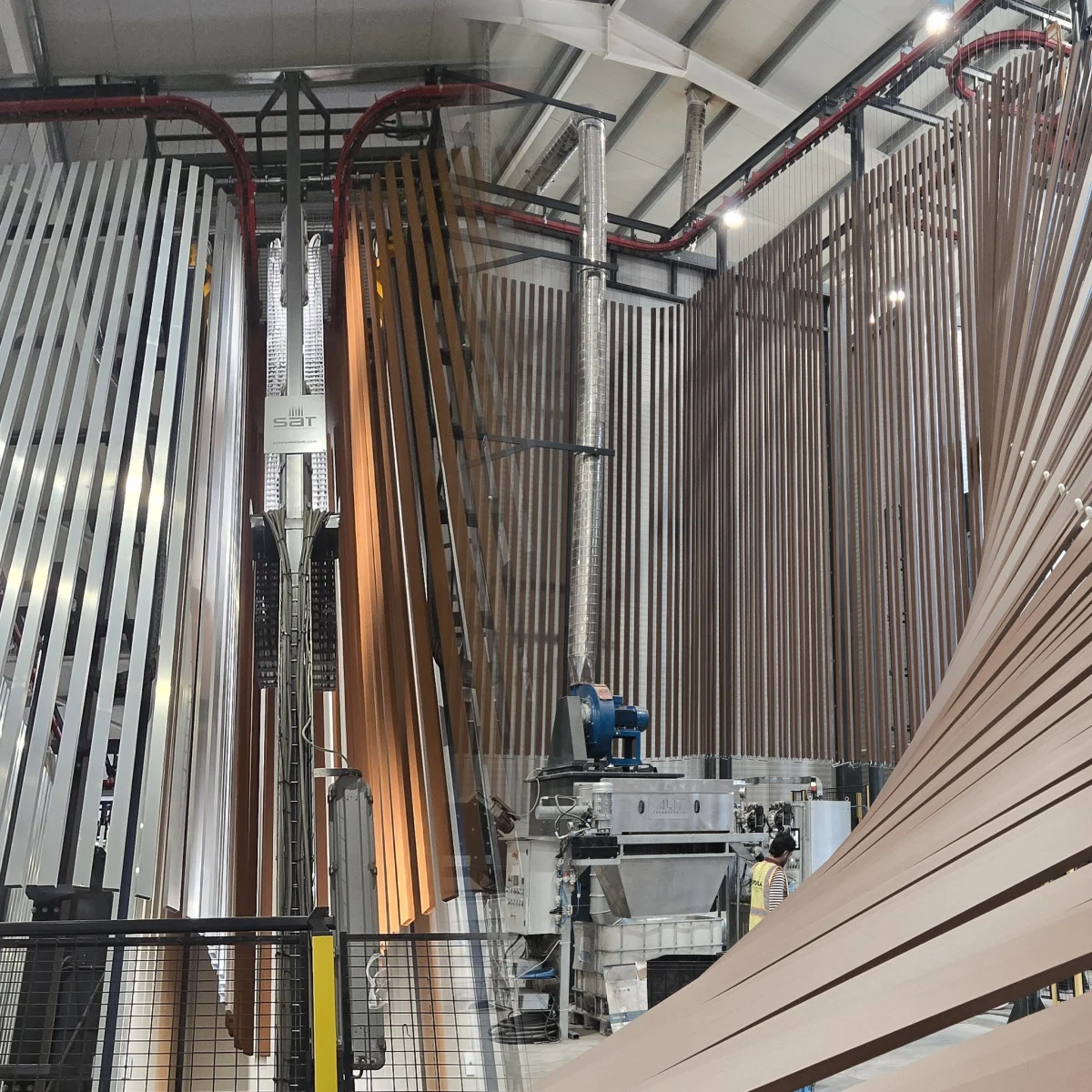
The profiles are hung vertically on hooks and chemically treated in a series of cascade baths, each followed by a water rinse. The overflow from these baths is channelled to the wastewater treatment plant for neutralisation and disposal.
Next come passivation (a chrome-free chemical coating that helps the powder adhere) and polyester powder coating (TGIC-free). Cyclones in the paint chamber capture and recover overspray powder.
Finally, the profiles are cured in an oven at 180–220 °C for 25–40 minutes (per the powder supplier’s specification), after which they are ready for packaging and delivery.